An outdoor ceremony, a permanent campus installation, a year-round display: each one tests a trophy in ways a glass case never will. Outdoor awards face sun, rain, temperature swings, and the occasional knock. Choose the wrong material and you get tarnish, cracks, and a faded finish within a single season. Corrosion alone costs the global economy $2.5 trillion a year, which shows how hard the elements work against unprotected metal.
Nearly 8 million students played high school sports in 2022-23, according to the National Federation of State High School Associations. Many of those games happen outside, and the awards that honor them face the same weather the athletes do. The material you pick is the single biggest factor in how long that trophy lasts. It sets the award’s strength, weight, look, and engraving quality.
| Material | Outdoor Durability | Corrosion Resistance | Engraving Detail | Best For |
|---|---|---|---|---|
| Stainless Steel & Bronze (Colucci’s Choice) | Excellent | Excellent | High to Excellent | Championship Trophies, Perpetual Awards |
| Aluminum | Very Good | Very Good | Good | Modern Plaques, Lightweight Trophies |
| Acrylic / Lucite | Good | Excellent | Excellent (Laser) | Indoor Recognition, Sponsor Awards |
| Crystal / Glass | Poor | Excellent | Excellent (Etching) | Indoor Ceremonial & Corporate Gifts |
| Cast Resin / Plastic | Fair to Good | Good | Fair | Budget Trophies, Youth Participation Awards |
The Unique Challenges of Outdoor Trophies
Outdoor awards fight the environment every day. Four forces do the damage: moisture, ultraviolet (UV) radiation, temperature swings, and airborne pollutants. Know your enemy and you pick a material that wins.
Moisture from rain, snow, and humidity drives rust and corrosion on vulnerable metals. UV light fades color and turns plastics and resins brittle. Temperature swings expand and contract the material, which cracks finishes and loosens components. Salt spray near the coast and industrial emissions in the city attack the surface and speed up chemical breakdown.
The weather is only half the story. A permanent trophy installation invites theft and vandalism, so weight and secure mounting matter as much as the metal itself. Heavy materials like bronze raise installation safety and mounting-hardware demands for large-scale awards and memorial plaques. Every engraved trophy collects grime over the years, so the material and engraving method have to keep names and dates legible long after the unveiling. Factor in upkeep too: a low-maintenance outdoor trophy in stainless steel or anodized aluminum costs less to own over a decade than one that needs a fresh protective coat every couple of seasons.
Key Properties of Weatherproof Trophy Materials
A few properties decide how an outdoor award performs and how long it holds its look. Weigh these five.
- Corrosion & weather resistance: how well the material shrugs off rust, tarnish, moisture, and UV exposure.
- Durability & hardness: its resistance to scratches, dents, and impact. A football trophy takes more abuse than a golf award.
- Engraving capability: how cleanly it holds fine detail. Crisp names, dates, and logos matter most.
- Weight & structure: density drives portability and the mounting requirements for permanent installs.
- Aesthetic & finish: the look, from the warmth of bronze to the sheen of polished steel.
Stainless Steel: The Gold Standard for Durability
For absolute longevity, stainless steel leads the field. This iron-based alloy contains chromium, which forms an invisible passive layer that resists rust and self-heals when scratched. The protection never stops.
Grades 304 and 316 are the common picks for outdoor use. Grade 316, known as “marine grade,” adds molybdenum for stronger resistance to the chlorides in saltwater. That makes it the right call for coastal cities and marine-themed campuses. Stainless steel takes a brilliant polish or a brushed texture, and it holds deep, crisp engraving that stays legible for decades.
Bronze: Classic Appeal with Enduring Strength
Bronze has shaped statues and monuments for centuries. This copper-tin alloy delivers excellent durability and a prestigious, timeless look. Bronze does not rust. It oxidizes into a blue-green patina, a stable outer layer that protects the metal underneath.
Many people prize that patina for the character and history it adds. If you want to keep the original polished finish, a protective lacquer and periodic maintenance hold it. Bronze is heavy and substantial, which suits perpetual trophies and outdoor memorial plaques. Its softness relative to steel captures intricate logos and textures in fine cast detail.
Aluminum: Lightweight, Corrosion-Resistant, and Modern
Aluminum pairs light weight with strength and natural corrosion resistance. Like stainless steel, it forms a protective oxide layer that blocks rust. It weighs far less than steel or bronze, so large trophies and plaques are easier to handle, ship, and mount.
Anodizing is the go-to finish for aluminum awards. The electrochemical process thickens the oxide layer and locks in color, producing a vibrant, fade-resistant surface in a wide range of shades. Anodized aluminum fits modern, sleek designs and takes laser engraving cleanly for sharp, high-contrast marks.
Zinc Alloys: The Versatile Choice for Custom Designs
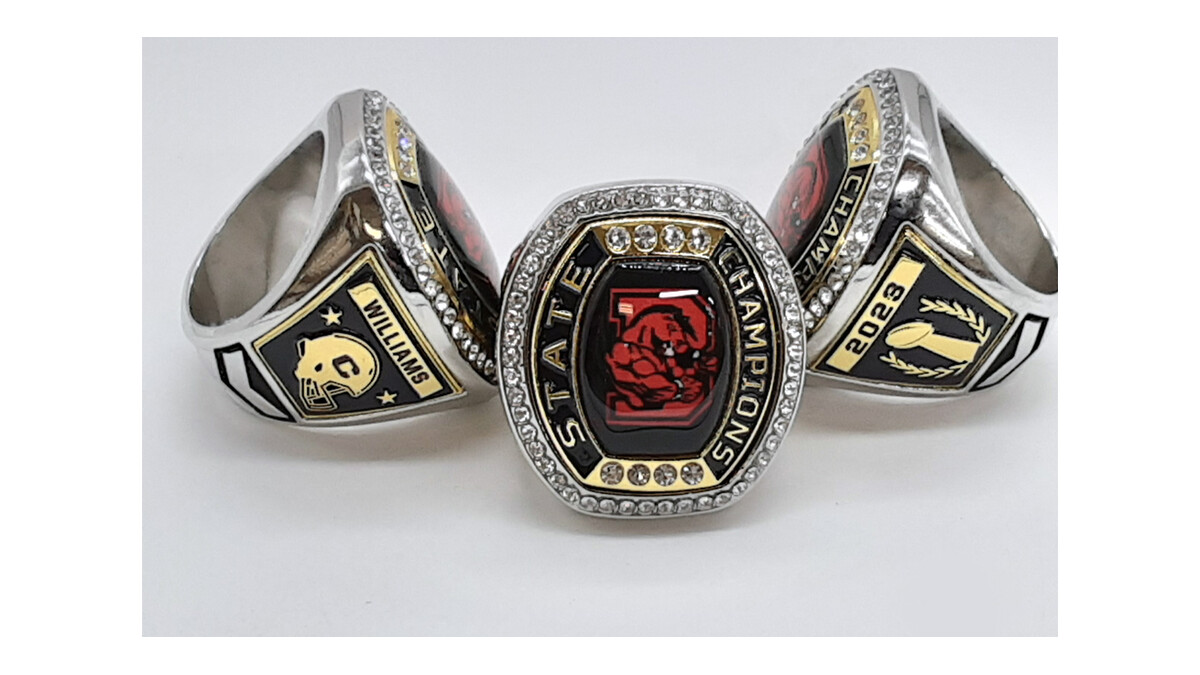
Zinc alloys power the custom awards industry thanks to their castability and clean finish. A solid zinc trophy is not built for permanent outdoor display, but zinc alloys create the detailed, three-dimensional components that make an award one of a kind. We use the same material and process to craft the championship rings and medals seen at the highest levels of sport.
Zinc earns its place inside a larger assembly and through plating. We cast a custom figure, logo, or medallion in zinc, plate it in nickel, chrome, or gold, then mount it on a weather-resistant base. That hybrid build marries zinc’s design freedom with the durability of tougher metals, and it is how we deliver intricate, lasting outdoor trophies, from detailed medallions to the crest on a championship ring.
Specialty Polymers & Acrylics: Clarity Meets Resilience
Standard plastics go brittle and fade in the sun. Modern specialty polymers and acrylics, such as Lucite, change the equation for the right outdoor jobs. They stay optically clear, weigh little, and never rust or corrode. UV-stabilized acrylic resists yellowing and degradation for years of sun exposure.
Acrylic shines when you need complex shapes, embedded objects, or full-color graphics, and laser engraving leaves an elegant frosted effect. It scratches more easily than metal, so reserve it for covered outdoor spaces like breezeways and stadium concourses, where it dodges direct impact but still meets heat and humidity.
Beyond the Material: The Importance of Protective Coatings
Even the toughest material gains from an extra layer of defense. Protective coatings seal the surface against moisture and UV light, and they stretch the lifespan of an outdoor award.
For bronze and brass, a clear industrial lacquer or powder coat stops oxidation and keeps the polish. Powder coating applies a dry powder electrostatically, then cures it under heat into a finish tougher than conventional paint. On any engraved trophy, apply the coating after engraving, or cut the engraving cleanly through it, so the mark stays sharp.
Sustainable and Recycled Metals: The Next Generation of Awards
Recognition programs increasingly ask for sustainable trophy materials, and metal answers the call. Aluminum and stainless steel are fully recyclable, and both are routinely produced with high recycled content without losing strength or finish quality. Choosing a recycled-content metal base for an all-weather award lowers its footprint while keeping the durability an outdoor trophy demands. It is a practical way to align a permanent recognition piece with your organization’s environmental goals.
How to Choose the Right Material for Your Outdoor Trophy
The right choice balances four factors: environment, budget, look, and longevity. Start with location. Will the award face coastal salt spray, harsh sun, or constant handling by celebrating teams? For the toughest spots, marine-grade 316 stainless steel is the safest investment. For a monumental feel where aging adds appeal, bronze stands alone.
Match the material to your design. A lightweight, modern award with color options points to anodized aluminum. Intricate, custom-cast 3D elements call for plated zinc components on a steel or stone base. Talk it through with an awards specialist and you land on the exact material that makes your trophy last. The right award starts with the right material.
Ready to create an all-weather trophy that lasts a lifetime? Explore our gallery of custom trophies and see how our USA-crafted quality and durable materials bring your vision to life.
Frequently Asked Questions (FAQs)
What is the most durable material for an outdoor trophy?
Marine-grade 316 stainless steel is the top choice for all-weather durability. It resists rust and corrosion even in saltwater environments, which makes it ideal for permanent outdoor installations.
How do I keep a bronze trophy from turning green?
The green patina is natural oxidation. Seal the trophy with a protective clear coat or lacquer to hold the polished look. Plan to reapply the coating every few years, depending on how much weather it faces.
Are engraved details on a trophy permanent?
Yes, on the right material. Deep mechanical engraving or laser etching on stainless steel, bronze, and aluminum lasts the lifetime of the award. The names and dates stay crisp and legible for generations.
Can you make a large trophy that is not extremely heavy?
Yes. Aluminum builds large, lightweight awards. It is far less dense than steel or bronze yet still strong and weather-resistant, which suits trophies that move often or face mounting limits.
Is stainless steel or bronze better for an outdoor trophy?
Both excel outdoors, but the better choice depends on the setting. Stainless steel, especially marine-grade 316, wins for maximum durability and a modern look in coastal or high-traffic spots. Bronze wins where a classic, monumental feel matters and a natural patina is welcome, which makes it a favorite for memorial awards and permanent installations.