Custom coin orders fail in predictable ways. An overseas vendor ships featherweight zinc tokens with muddy detail, enamel that misses your Pantone colors, and a delivery date that lands the week after the banquet.
Branded metal is a serious category. U.S. distributor sales of promotional and branded merchandise reached $27.1 billion in 2025, up 1.3% over the prior year, in PPAI’s U.S. Distributor Sales Volume Estimate. Recall runs high as well. ASI’s 2026 Global Advertising Impressions Study reports that 85% of consumers remember the advertiser who handed them a logoed product.
A custom military or corporate challenge coin outlives the ceremony. It rides in a pocket, sits on a desk, or stands in a display case for years, and every flaw you waved through at proof stage stays visible that entire time. Choosing among challenge coin makers comes down to three questions: how the coin is formed, what it is formed from, and whether the shop will put a ship date in writing.
Die-Struck Versus Die-Cast: How Custom Coins Get Made
Two manufacturing methods dominate this category. Die striking presses a solid brass, bronze, or copper blank between hardened steel dies under enormous hydraulic pressure. The metal flows into every cut in the die, which produces sharp lettering, crisp edges, and real weight in the hand. Military units, law enforcement and fire departments, and corporate recognition programs almost always want a struck coin.
Die casting pours or injects molten zinc alloy into a steel mold. Zinc melts at a much lower temperature, so it handles deep 3D topography, cutouts, spinners, and irregular outlines that a struck blank cannot hold. Zinc is also less dense than brass, so a cast coin feels lighter at the same diameter. Good coin shops answer that by stepping thickness up, which restores the heft buyers expect.
Colucci Custom Awards die-strikes custom coins from solid bronze, copper, and zinc alloy at our South Carolina facility, and we publish the price list rather than hiding it behind a callback.
Surface treatment sets the look. Electroplating deposits a real metal layer over the base: polished gold, antique silver, satin nickel, black nickel, or antique bronze. An antique finish adds a dark patina that gets buffed back by hand, so raised relief reads bright while the recesses stay dark. That contrast is what makes micro-text legible at arm’s length.
Challenges to Expect When You Order Custom Coins
- Pitted, porous surfaces. Low-grade zinc casting traps air pockets during injection. Those pockets open up in the acid and plating baths and leave craters across flat fields.
- Enamel that misses its borders. Soft enamel sits below the raised metal lines. Hard enamel is baked and ground flat. Rushed syringe work bleeds color over the metal lines, pools in the center, or lands off the Pantone number you supplied.
- Gradients and photographic insignias. Enamel cannot fade one color into another and it cannot hold photographic detail. Artwork like that needs a printed insert or a digital print sealed under a dome, and a shop that stays silent about the limit ships you a flattened, posterized version of your emblem.
- Tooling fees that surface at checkout. Mold and die charges plus art setup sit outside the per-coin price at most suppliers, so the number you compared on is not the number you pay. Our price list shows the mold and die charge per decorated side; ask every other shop to do the same before you commit.
- Off-center faces and rough rims. Sloppy mold work produces uneven rims, misaligned obverse and reverse art, and parting lines you can feel where the mold halves met.
- Plating that flakes. Budget plating lines skip the nickel barrier coat under the gold or silver. Without that barrier, the top layer flakes, tarnishes, or greens within months of pocket carry.
- A broker between you and the press. Many coin websites own no equipment. They forward your file to an unnamed overseas shop, so nobody on your call has authority over plating thickness, reject rates, or the ship date.
- Customs and freight delays. An import shipment held at the port turns a comfortable schedule into a missed ceremony, and no rush fee gets the container released faster.
2D Versus 3D Relief Detailing
The die style decides the sculpt. In a 2D design, every level is flat and parallel to the coin face. Raised metal sits at one fixed height and the recessed floor holds color fill or texture. That works for corporate logos, school crests, and text-heavy unit emblems.
A 3D die carries continuous curvature instead of flat plateaus: facial features, muscle, terrain, and layered architecture. Artists sculpt the file digitally, then a multi-axis CNC path cuts it into the steel. A 3D die costs more in tooling up front. It also produces the piece people pick up and turn over, which is the whole point of a commemorative coin.
Soft Enamel, Hard Enamel, and Epoxy Domes
Color format drives both the look and how the coin ages. Three options cover almost every order.
Soft Enamel
Pigmented enamel drops into the recesses formed by raised metal borders, then bakes at moderate heat. The color shrinks slightly as it cures, so the metal lines stand proud of the color fields. You can feel the design with a fingertip. It is the most affordable option and the most common.
Hard Enamel (Cloisonné)
Glass-like colored resin fills the same recesses, bakes at high heat, and then gets ground on diamond wheels until metal and color form one flat plane. The result resists scratches and keeps its color under daily carry. Hard enamel costs more and takes longer, and it is the right call for a coin someone will carry for a decade.
Epoxy Domes
A clear resin dome poured over cured soft enamel shields the color from keys and pocket wear. Lower-grade resins yellow with ultraviolet exposure, so a domed coin left on a sunny desk shifts tone over the years. For pieces meant to last, choose hard enamel over a dome.
How Four Challenge Coin Makers Compare
Published policy tells you more than a sales call. Here is what four U.S. coin suppliers state on their own sites. Cells marked as not listed mean the company does not publish that detail.
| Coin Maker | Where Coins Are Made | Minimum Order | Proof Before Production | Published Production Time |
|---|---|---|---|---|
| Colucci Custom Awards | South Carolina, die-struck in house | None, single coins accepted | Free 3D proof, revisions until you approve | Xpress 3 to 4 weeks, Elite 4 to 6 weeks from approved proof |
| Signature Coins | Own USA production facility for its Made in USA line | None on the online coin builder, 100 on the quote form | Free design proof within 24 hours | Not publicly listed |
| ChallengeCoins4Less | Ocala, Florida company with a separate USA-made coin line | 25 coins | Free digital proof with unlimited revisions | 14 to 17 business days after proof approval |
| SymbolArts | Ogden, Utah, in business since 1986 | Not publicly listed | Not publicly listed | Not publicly listed |
Matching Coins With Medals, Rings, and Trophies
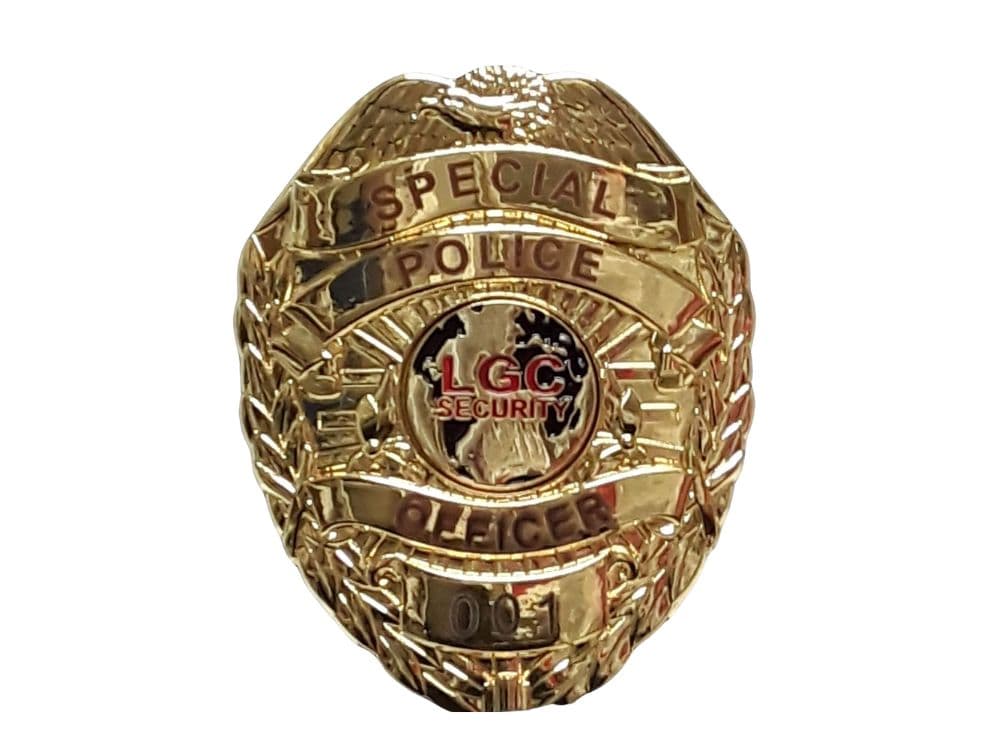
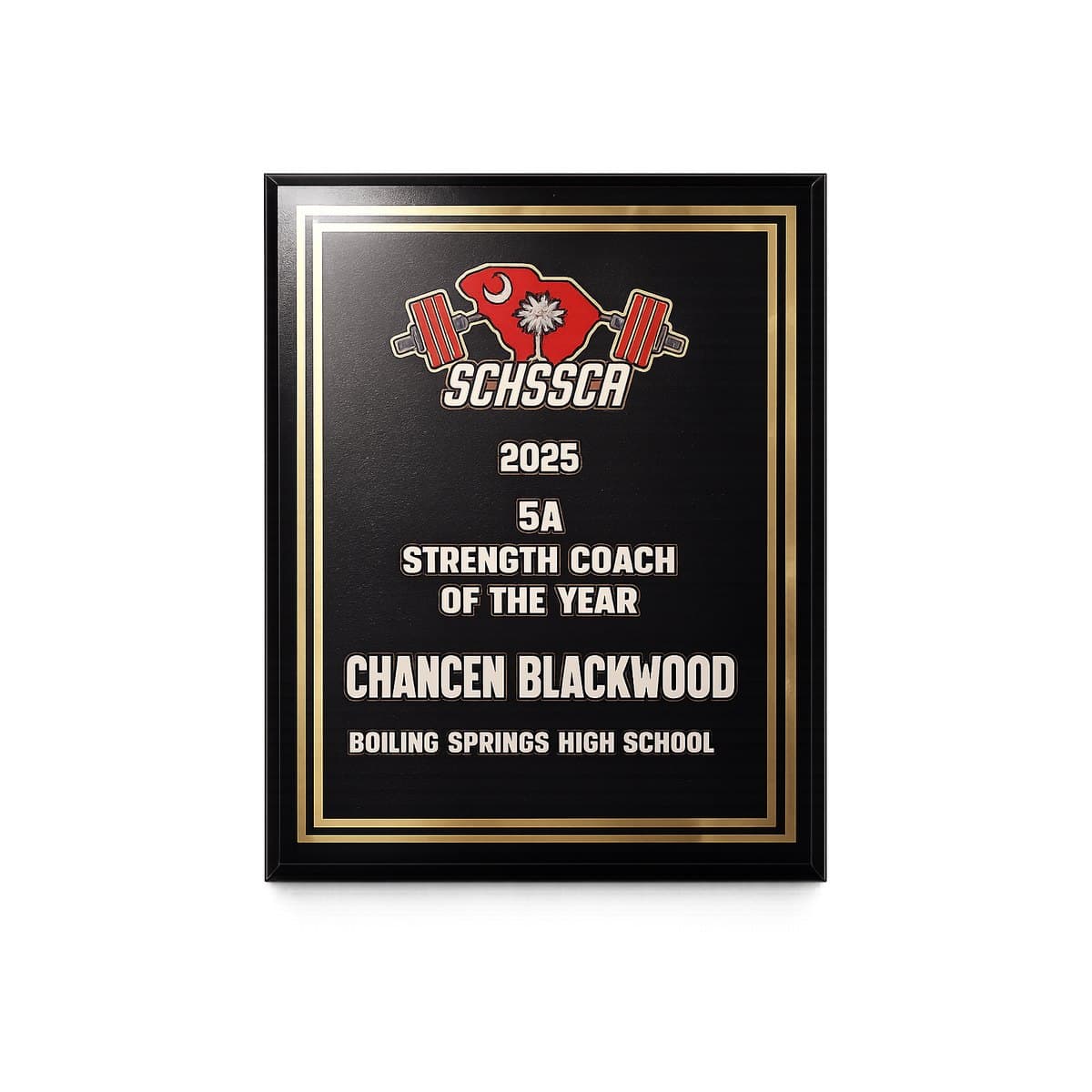
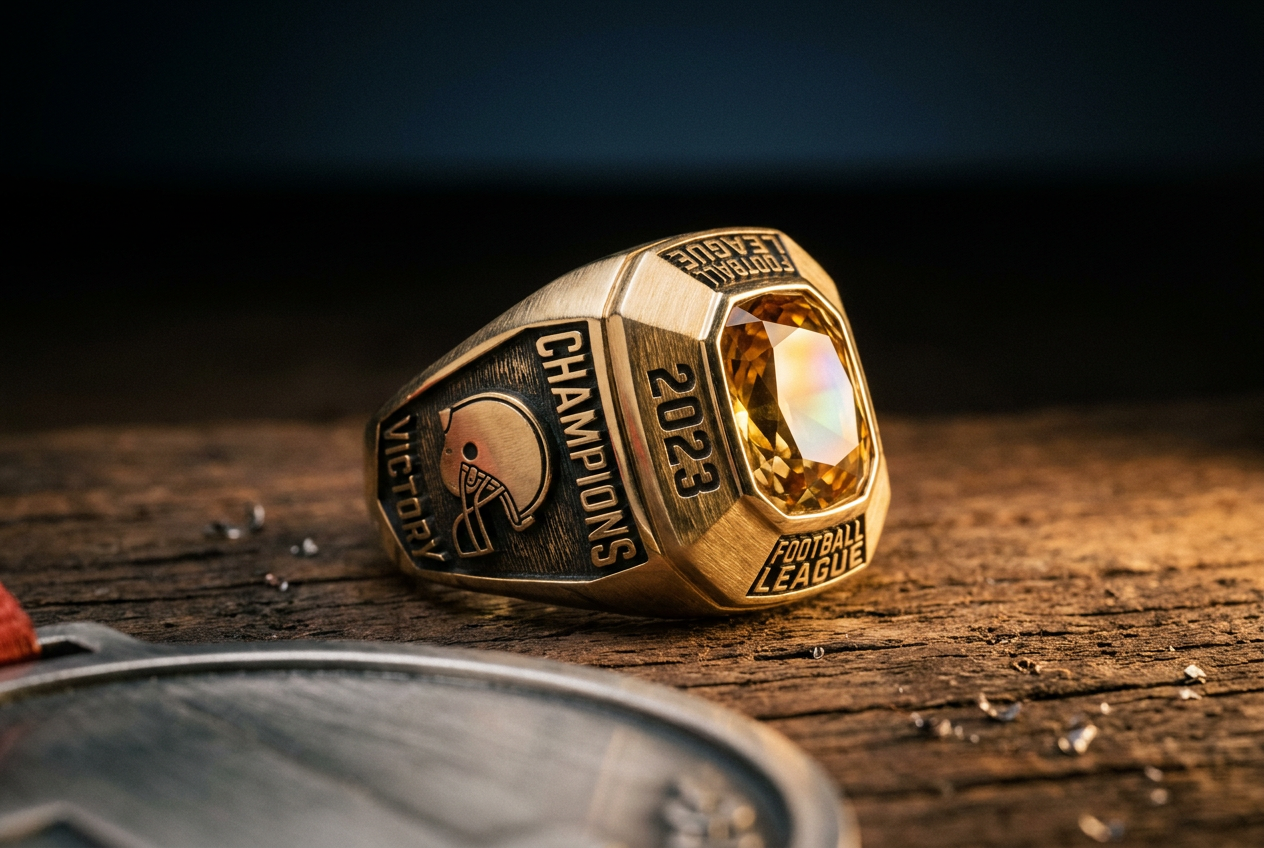
Almost nobody recognizes a full program with coins alone. A police department pairs law enforcement challenge coins with badges and retirement plaques. An athletic program pairs them with rings, medals, and banners. A sales organization pairs them with trophies at the President’s Club dinner.
Those pieces should look related. The same vector art, 3D sculpt, and Pantone numbers that drive a coin also drive a ring top crest and a medal face. When one shop handles the whole set, plating tones match across metal types and ribbon hardware matches across custom medals and coins. Split the order across three suppliers and you get three different golds.
Inside the Production Line
- Vector engineering. Designers rebuild flat line art as production-ready vectors and thicken any stroke too fine to hold enamel without leaking.
- Die sinking. CNC engravers cut the reverse image into heat-treated tool steel. A die sinker checks the cavity under magnification, polishes the background, and sandblasts texture where the art calls for it.
- Blanking and striking. Metal strip stock feeds a press that punches clean discs. The minting press strikes both faces at once, and piercing tools shear the flash off the outside diameter.
- Edge work. Diamond cut edges, reeded edges, cross cuts, and rope borders go on at dedicated lathes before any plating.
- Plating. Racked coins move through ultrasonic degreasing, acid pickling, and the plating baths, with timed cycles that hold deposit thickness across copper, nickel, and the decorative top layer.
- Color and inspection. Artisans fill the recesses with micro-syringes, the coins bake and get polished, and inspectors check every piece under high-intensity light for pitting, pinholes, and off-register text.
Four Questions to Ask Before Anyone Cuts Steel
Four facts separate a manufacturer from a middleman. Does the company own the presses? Does it publish a minimum, or does the answer change with the salesperson? Does it produce a real 3D proof, with the mold and die charge itemized, before steel gets cut? Does it commit to a ship date in writing?
Ask for a physical sample before you spend the booster club’s money. A flat art file will not tell you how relief heights, bevels, and an antique wash behave under real light. Weigh the sample, run a thumb over the rim, and hold the enamel up next to your brand colors. Then count backward from your ceremony date and add shipping, because the presentation date never moves.
Send us your logo, a sketch, or a rough idea and request a free quote. You get a 3D proof from the Colucci Custom Awards design team, no minimum order, revisions until you sign off, and coins struck in our South Carolina shop.
Frequently Asked Questions (FAQs)
What size and thickness should I order for custom challenge coins?
The 1.75 inch coin is the workhorse size and anchors our published price list. Two inch coins give a dual-sided 3D sculpt more room to breathe. Thickness typically runs 3 mm on a struck coin up to 4.5 mm on heavier cast pieces, which is how a cast coin regains the weight it loses to zinc.
What is the difference between soft enamel and hard enamel coins?
Soft enamel sits below the raised metal lines, so you feel texture across the face. Hard enamel bakes at high heat and gets polished flat with the metal, which gives a smooth, jewelry-grade surface that shrugs off scratches. Soft enamel costs less. Hard enamel wears better.
Do challenge coin makers require a minimum order?
Most do. ChallengeCoins4Less sets its minimum at 25 coins, and Signature Coins asks for 100 on its standard quote form. We take single coin orders, so a one-off retirement piece gets the same die-struck treatment as a 500 piece run.
How long does production take from artwork approval to delivery?
Plan on three to six weeks after proof approval. Our Xpress coins ship in 3 to 4 weeks and our Elite coins in 4 to 6 weeks, while ChallengeCoins4Less publishes 14 to 17 business days. That window covers die cutting, striking, edge work, plating, color fill, baking, and inspection.
Are custom coins made in the USA or overseas?
Most low-bid coin websites route orders to overseas casting shops, which is where the customs holds and the porous zinc come from. We design and strike custom metal coins in our own South Carolina facility, so the proof, the press, and the ship date all sit under one roof.
Should I see a 3D proof before the die is cut?
Yes, and it should be a dimensional proof rather than a flat art file. A flat file will not show you how relief heights, bevels and plating borders will read once they are struck into metal. Ask for the mold and die charge to be itemized on that same proof, before steel gets cut, so a tooling change cannot turn up on a later invoice.