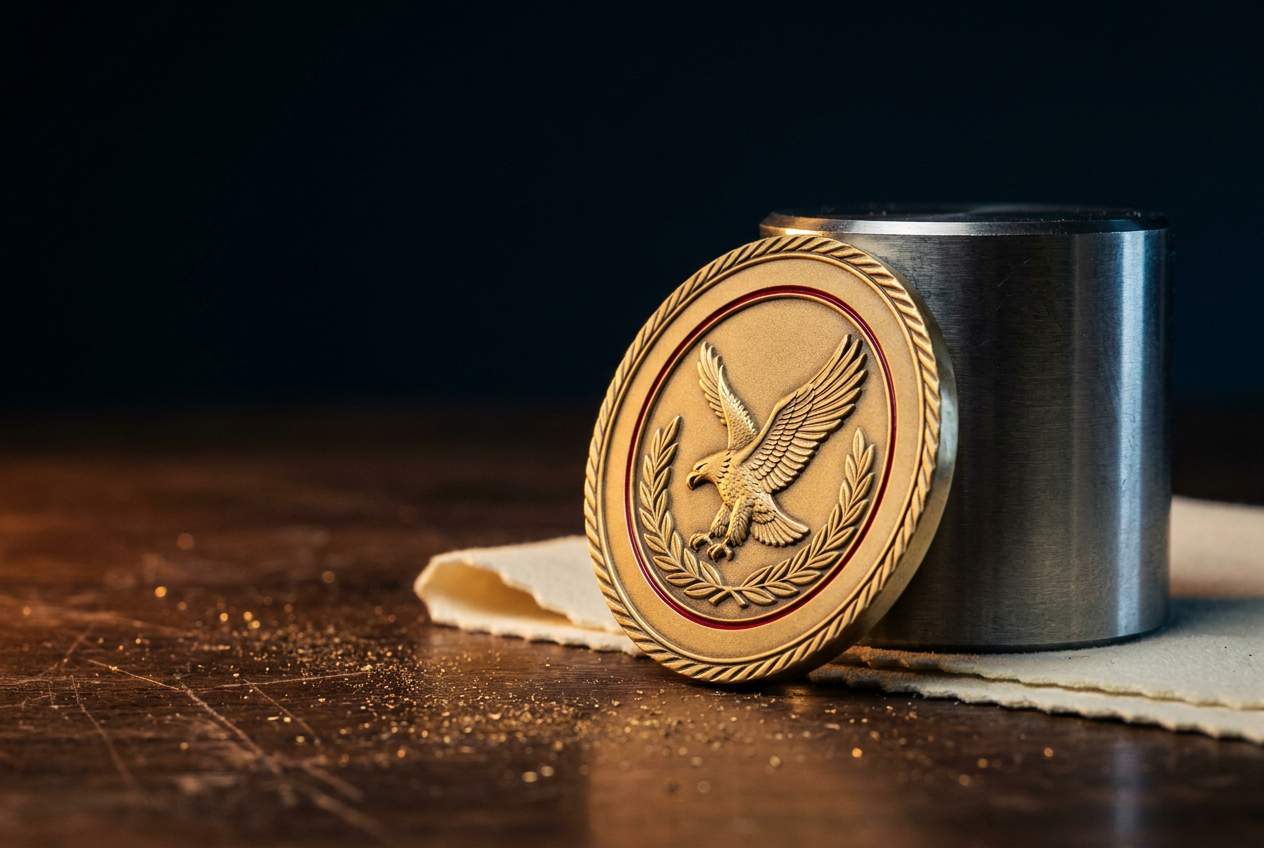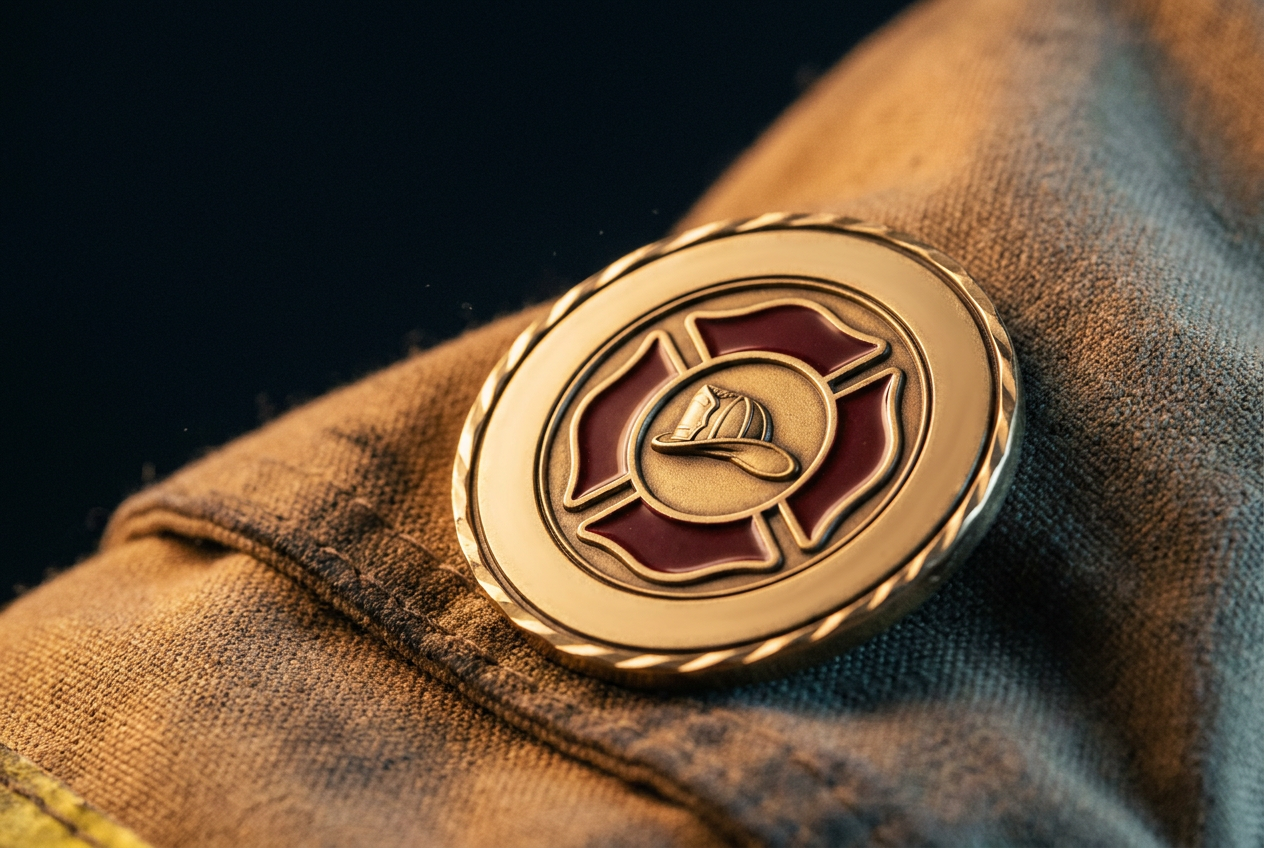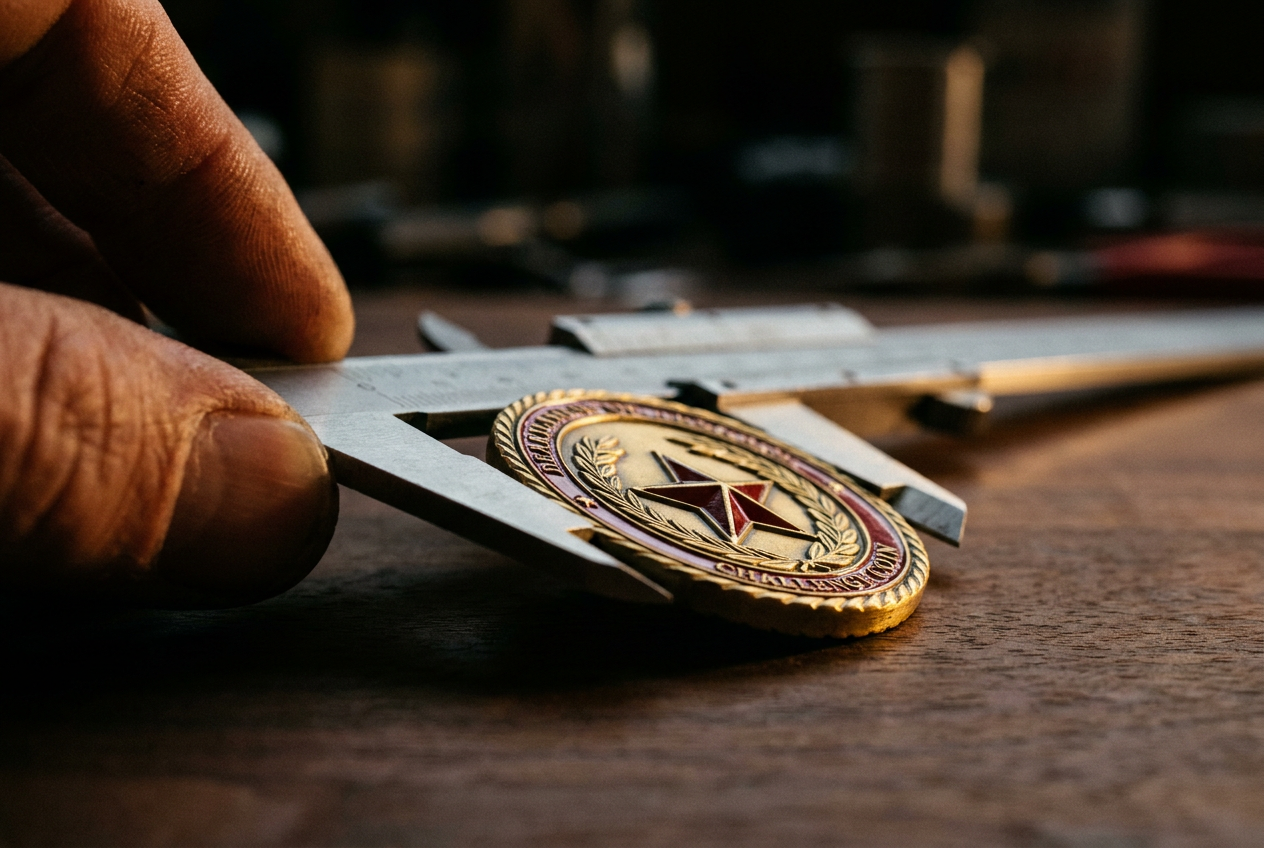
Challenge coins come in diameters from 1-1/4 inch (32 mm) to 3 inch (76 mm). For pocket carry and a handshake pass, order 1-1/2 inch (38 mm) or 1-3/4 inch (44 mm); for a lanyard, 2 inch (51 mm) or 2-1/4 inch (57 mm); for a display case, 2-3/4 inch (70 mm) or 3 inch (76 mm). Each step up in size uses more metal, so size also sets your price.
The right size decides whether the coin gets carried at all. Recognition is already scarce: a Gallup analysis found that only about one in three U.S. workers strongly agreed they had received recognition or praise for good work in the past seven days. A coin that’s too heavy for a pocket ends up in a desk drawer instead of closing that gap.
Praise does not have to come as cash. In a McKinsey survey, respondents rated noncash motivators such as praise from immediate managers as no less effective, or more effective, than cash bonuses, higher base pay and stock options. A coin in the right size turns that praise into something your people can hold.
Challenge Coin Dimensions at a Glance
Choose your size by answering one question: will the recipient carry it, wear it on a lanyard, or display it? Then check these facts before you set a budget.
- Price from: die struck coins from $55.75 each, soft enamel from $63.50 and hard enamel from $71, plus a $75 one-time setup. The price per coin falls as your quantity rises and climbs with diameter.
- Minimum order: none. Order 1 coin or 100.
- Sizes offered: 1-1/4 to 3 inch, in quarter-inch steps (32 mm to 76 mm).
- What you can customize: size, coin style (die struck, soft enamel or hard enamel) and your artwork, all shown on a free digital proof before production.
Challenge Coin Size Chart in Inches and mm
Use the chart below to match each diameter to its best use. Unit prices for every size and quantity are listed on our custom challenge coin price-by-size grid.
| Size (inch / mm) | Typical Use | Where It Fits | Price From |
|---|---|---|---|
| 1-1/4 inch (32 mm) | Simple text or basic logos | Wallet or small pocket | See price-by-size grid |
| 1-1/2 inch (38 mm) | Standard team or corporate recognition | Standard pocket | See price-by-size grid |
| 1-3/4 inch (44 mm) | Detailed artwork for daily carry | Standard pocket | See price-by-size grid |
| 2 inch (51 mm) | Tournament awards and heavier medallions | Lanyard or small case | See price-by-size grid |
| 2-1/4 inch (57 mm) | Complex multi-color artwork | Lanyard or desk case | See price-by-size grid |
| 2-1/2 inch (64 mm) | Executive gifts | Desk display case | See price-by-size grid |
| 2-3/4 inch (70 mm) | Large display pieces and milestone awards | Prominent display case | See price-by-size grid |
| 3 inch (76 mm) | Flagship display pieces with deep relief | Prominent display case | See price-by-size grid |
Which Size Fits a Pocket, a Display Case, or a Lanyard
Start with where the coin will live. For everyday pocket carry, 1-1/2 inch (38 mm) to 1-3/4 inch (44 mm) is the right range. These coins sit flat, don’t weigh down clothing, and fit in the palm for a discreet handshake pass. For a wallet slot, choose 1-1/4 inch (32 mm).
A coin worn on a lanyard needs a bigger face that reads from a few feet away. A 2 inch (51 mm) or 2-1/4 inch (57 mm) coin works well for tournament awards and VIP passes. It delivers visual impact and stays comfortable for hours.
Desk and case displays call for maximum surface area. Colucci Custom Awards makes 2-3/4 inch (70 mm) and 3 inch (76 mm) coins for exactly this use. At that scale, the coin works like a small plaque, and your design gets room for deep relief cuts, sculpted detail and complex borders.
How Size and Metal Style Change the Price
Two things set your price: how much metal the coin uses and how complex the finish is. Each quarter-inch step up in diameter takes more metal and a larger die, which raises the base unit price. The price per coin then falls as your quantity grows. To budget by size, use our challenge coin cost estimator.
Die struck coins use raised and recessed metal with no added color. Skipping the enamel fill gives this classic metal-on-metal look the lowest starting price of our three styles, from $55.75 per coin. See your options on our die struck challenge coins page.
Soft enamel adds color. Liquid enamel fills the recessed areas, and the raised metal edges stay exposed, so you can feel the texture with your thumb. It balances bright color with mid-range pricing, from $63.50 per coin. Explore it on our soft enamel challenge coins page.
Hard enamel is the most polished of the three. Color overfills the recesses, then the surface is sanded until the enamel sits flush with the metal. The extra baking, sanding and polishing produce a smooth face and the highest starting price, from $71 per coin. See examples on our hard enamel challenge coins page.
Common Sizing Mistakes When Ordering Challenge Coins
Most sizing problems start when buyers pick a diameter by budget alone. Here are three mistakes to avoid.
Ignoring How the Coin Will Be Carried
The biggest mistake is forgetting how the recipient will use the coin. A 2-1/2 inch (64 mm) coin feels substantial in your hand. In a trouser pocket, it’s heavy and uncomfortable.
Every award has to fit the person who gets it. A custom award sizing guide does that job for coins: it keeps you from ordering display pieces for daily carry. If your team will carry the coin every day, stay at 2 inch (51 mm) or under.
Packing Too Much Artwork Onto a Small Coin
Detailed designs need room. A five-color logo with fine text and a sculpted mascot won’t read clearly on a 1-1/4 inch (32 mm) coin.
Metal lines need a minimum thickness to hold enamel. When the art is too dense for the diameter, the design has to be simplified, and every round of changes adds another proof review before production can start. If your ceremony date is fixed, size up or simplify the art before you order, not after the first proof.
Forgetting Weight, Shipping and Presentation
Weight climbs fast as diameter grows. A 3 inch (76 mm) coin feels like a paperweight, and a box of large coins weighs far more than the same count at 1-1/2 inch (38 mm), so it costs more to ship. A large face also needs enough thickness to feel solid, so check the thickness on your proof.
Handing out a coin that size without a box or stand makes for an awkward moment. Budget for display boxes when you order large coins. They protect the piece and make the handoff feel like a ceremony.
Questions Buyers Also Ask
What is the standard challenge coin size?
No single size is an official standard, but several makers base their published prices on a 1-1/2 inch (38 mm) coin, including Coins For Anything and Challenge Coins Ltd. For most team and corporate programs, start at 1-1/2 inch (38 mm) or 1-3/4 inch (44 mm). That range balances clear artwork with comfortable daily carry.
What size challenge coin fits in a pocket or wallet?
A 1-1/2 inch (38 mm) or 1-3/4 inch (44 mm) coin fits a standard trouser pocket without feeling heavy. For a wallet slot, choose 1-1/4 inch (32 mm) so the leather doesn’t stretch or bulge.
Does a bigger challenge coin cost more?
Yes. Each quarter-inch step up takes more metal and a larger die, so moving from 1-1/2 inch (38 mm) to 2 inch (51 mm) raises your unit price. Our price-by-size grid shows the exact difference at your quantity.
How thick is a challenge coin?
Thickness varies by maker. Coins For Anything, for example, lists its standard coins at 3.5 mm thick. Ask for the thickness on your proof, especially for a 2-1/2 inch (64 mm) coin or larger, where a thin profile feels flimsy in the hand.
What size works best for a display case or a lanyard?
For a lanyard, choose 2 inch (51 mm) or 2-1/4 inch (57 mm); the coin reads clearly without pulling on the neck. For a display case, step up to 2-3/4 inch (70 mm) or 3 inch (76 mm). Those sizes hold the most detail and command attention on a shelf.
Set Your Coin Size, Then Lock In a Free Proof
Start with the recipient, not the design file, and let daily use set the size.
If your team will carry the coin to events and meetings, cap your order at 1-3/4 inch (44 mm). If your artwork uses five colors and dense type, start at 2 inch (51 mm) for clean lines. If the coin will sit on a desk or in a case, go to 2-3/4 inch (70 mm) or 3 inch (76 mm).
Send us your artwork and tell us how the coin will be used, and our team will match it to the right size before you set your budget. Request a free quote to get a price breakdown by size and a free digital proof of your design. With no minimum order, you can order 1 coin or 100.
Frequently Asked Questions (FAQs)
Can we order the same design in more than one size?
Yes. A different diameter needs its own die, so ask us to quote each size separately. Teams use this to separate standard member coins from larger VIP or milestone gifts.
How do custom shapes affect challenge coin measurements?
For a shield, state outline or mascot head, give the longest dimension, top to bottom or side to side, when you request pricing. A shield that’s 2 inch (51 mm) tall and 1-1/2 inch (38 mm) wide belongs on the 2 inch row of the chart. Your free digital proof shows the final measurements before production.
Is there a minimum order for custom challenge coins?
No. Colucci Custom Awards has no minimum order on custom coins, so you can order a single coin for one retiree or a full run for your whole organization. The $75 one-time setup applies either way, and the price per coin falls as quantity rises.
Will I see my coin before it is made?
Yes. Every order includes a free digital proof showing your artwork at the size you chose. Review it, request any changes, then approve it for production.